

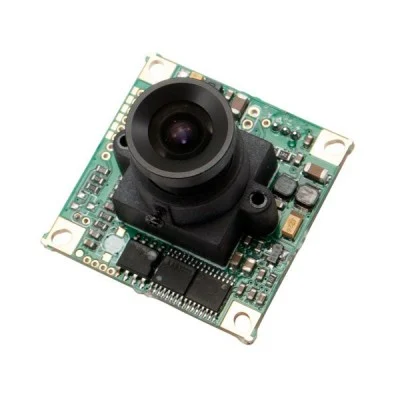
In the rapidly evolving landscape of machine vision and surveillance, the demand for hardware that balances high-fidelity resolution with low-light reliability remains constant. Open-Electronics has recently spotlighted a robust solution for developers and security engineers: the Sony Color Camera Module, featuring a 700 TV-line (TVL) resolution and a sophisticated CCD (Charge-Coupled Device) sensor architecture. As industries ranging from robotics to specialized security systems continue to miniaturize, this module offers a compelling case study in the enduring value of CCD technology over CMOS in specific, high-contrast applications.
Main Facts: The Intersection of Resolution and Sensitivity
At the heart of this module lies a 1/3-inch CCD sensor, a component renowned in the imaging industry for its superior global shutter capabilities and excellent color reproduction. Unlike rolling-shutter CMOS sensors, which can introduce artifacts in fast-moving environments, the CCD architecture provides a synchronous capture that is vital for FPV (First Person View) racing drones, industrial inspection robots, and high-stakes security monitoring.
Technical Specifications
- Sensor Technology: 1/3” CCD with integrated SONY DSP (Digital Signal Processor).
- Resolution: 700 TV Lines, providing a crisp, high-detail output.
- Optics: Fixed 3.6mm lens, offering a wide field of view (FOV) suitable for situational awareness.
- Low-Light Performance: Sensitivity threshold of 0.1 Lux.
- Application Scope: FPV robotics, home security, and machine vision prototypes.
The inclusion of a dedicated SONY DSP is a critical differentiator. While the sensor captures the raw photons, the DSP processes the data in real-time, handling noise reduction, white balance, and contrast enhancement. This offloads significant processing power from the host controller, making it an ideal choice for embedded systems with limited CPU overhead.
Chronology: The Evolution of CCD in Embedded Vision
To understand why this specific module remains relevant, one must look at the historical trajectory of imaging sensors.
The Era of Dominance (1990s–2010)
CCD sensors were the industry standard for decades. Their ability to convert light into electronic signals with high dynamic range and minimal noise made them the backbone of professional broadcasting and high-end security.
The CMOS Disruption (2010–2020)
As consumer smartphones drove the demand for cheaper, lower-power sensors, CMOS technology saw massive investment. CMOS sensors became cheaper to produce and easier to integrate into mobile devices. However, this shift created a gap in the market for "prosumer" and industrial applications where the specific noise-handling characteristics of CCD remained superior.
The Contemporary Renaissance (2020–Present)
We are currently in a phase where "old-school" CCD technology is being refined for niche applications. The module offered by Open-Electronics represents this refined iteration—compact, affordable, and optimized for the specific, rigorous demands of FPV and embedded surveillance. It is a testament to the idea that for specific visual tasks, the maturity of CCD architecture often outperforms the raw speed of newer, budget-tier CMOS sensors.

Supporting Data: Why 700 TVL Still Matters
For many users, the move to 4K or 1080p digital streams seems logical, yet the "TV Line" (TVL) standard remains the benchmark for analog signal transmission. Why?
- Latency: In FPV applications, digital video—even high-definition—introduces latency (the time delay between the camera capturing an image and the monitor displaying it). In high-speed drone racing, a delay of even 50 milliseconds can be the difference between a successful maneuver and a crash. The analog signal from this Sony CCD module provides near-zero latency.
- Signal Integrity: 700 TVL represents the upper echelon of what analog transmission can resolve. It provides enough detail for human operators to distinguish textures and navigate complex environments without the "pixelation" or frame-dropping that can occur when digital compression algorithms struggle with high-motion scenes.
- Low-Light Capability: The 0.1 Lux rating is not merely a marketing metric; it signifies the sensor’s ability to maintain a signal-to-noise ratio in dim conditions. While digital sensors often rely on heavy computational denoising, which can blur details, the CCD sensor’s hardware-level sensitivity allows for a cleaner, more natural image in dusk or interior settings.
Official Perspectives and Industry Implications
Industry experts frequently debate the trade-offs between analog and digital pipelines. From the perspective of the developers at Open-Electronics, the focus is on "system utility."
Integrating into Larger Ecosystems
The module is designed for ease of integration. By utilizing a standard 3.6mm lens, the module provides a natural perspective—neither overly distorted (as in ultra-wide "fisheye" lenses) nor overly constrained (as in telephoto lenses). This makes it a "goldilocks" solution for developers building DIY security systems or hobbyists exploring autonomous navigation.
The Future of Analog Surveillance
There is a growing sentiment in the security community that "Analog is not dead." As cybersecurity threats against internet-connected IP cameras rise, there is a distinct advantage to using a simple, hard-wired analog camera that cannot be hacked via a network. This module serves as a building block for "air-gapped" surveillance systems where security and reliability are prioritized over the convenience of remote cloud access.
Implications: The Impact on Robotics and DIY Projects
The availability of high-quality components like the Sony 700 TVL module has profound implications for the maker community and industrial prototyping.
Democratizing High-End Optics
Previously, high-resolution CCD modules were locked behind expensive industrial supply chains. By offering this module through the Open-Electronics store, the barrier to entry for high-performance visual projects is lowered. Students, researchers, and hobbyists can now build robots that "see" with the same clarity as professional-grade equipment.
The Rise of Modular Engineering
The modular nature of this camera aligns with the broader "Right to Repair" and "Open Hardware" movements. Rather than purchasing a proprietary, sealed camera unit that must be replaced in its entirety upon failure, engineers can utilize this module as a replaceable component in their own custom housing. This encourages sustainable design and longevity in the hardware lifecycle.

Considerations for Deployment
While the camera is highly capable, users must account for the analog-to-digital conversion process if they intend to process the imagery via modern microcontrollers like the Raspberry Pi or NVIDIA Jetson. This typically involves the use of an analog video capture card or a dedicated converter, which adds a layer of complexity but provides the user with total control over the data pipeline.
Conclusion: A Versatile Tool for Modern Engineering
The Sony 700 TVL CCD Color Camera Module is more than just a piece of hardware; it is a bridge between the reliability of legacy imaging standards and the requirements of modern embedded systems. By focusing on essential metrics—resolution, low-light sensitivity, and signal latency—this module offers a robust foundation for anyone looking to incorporate vision into their projects.
As the industry continues to prioritize data security and real-time performance, the relevance of such modules will only increase. Whether it is navigating a drone through a forest canopy or monitoring a secure industrial zone, the need for a clear, responsive, and reliable visual feed is paramount. Open-Electronics has effectively positioned this module as a staple component for the modern engineer’s toolkit, ensuring that the precision of Sony’s optics remains accessible to those who need it most.
For those interested in exploring the technical nuances further, the official documentation and the Open-Electronics store provide the necessary technical support to transition from prototype to final implementation. In a world increasingly obsessed with "more megapixels," this module reminds us that true performance is found in the quality of the sensor, the effectiveness of the DSP, and the reliability of the output.
Final Technical Notes for Integration
- Power Requirements: Ensure the module is supplied with a stable DC voltage as specified in the datasheet to prevent CCD blooming or noise interference.
- Mounting: The 3.6mm lens mount is standard; however, users should consider vibration dampening in high-speed FPV applications to maximize the clarity of the 700 TVL output.
- Environmental Protection: While the module is rugged, it is designed for integration into a chassis. For outdoor use, ensure the housing provides adequate IP-rated protection against moisture and dust.
This camera module stands as a testament to the longevity of CCD technology, proving that when engineering is focused on the core fundamentals of optics and signal processing, the results provide utility that transcends changing market trends. For the professional, the hobbyist, and the innovator, it remains a reliable "eye" for the next generation of electronic projects.